
The precision of prototype machining is mainly divided based on process capability and tolerance range, and different precision levels correspond to different industry application scenarios.
1、 Precision level divided by process
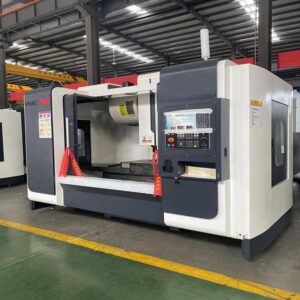
The precision of five axis CNC machining is the highest, reaching ± 0.005~0.01mm, suitable for fields with extremely high precision requirements, such as aerospace components, medical implants, precision instruments and other high-end scenarios.
The three-axis CNC machining accuracy is ± 0.01~0.05mm, achieving a good balance between accuracy and cost, and widely used in industrial fields such as automotive engine components and 3C electronic structural components.
SLA photopolymerization 3D printing has an accuracy of ± 0.05~0.1mm, suitable for appearance verification and rapid prototyping of complex surface models, and can effectively restore product surface details.
The SLS nylon 3D printing accuracy is ± 0.1~0.15mm, mainly used for functional testing and small batch structural component production. Nylon material itself has good toughness and heat resistance.
The small-scale trial production of silicone replica with an accuracy of ± 0.15100 pieces can achieve product performance close to injection molded parts at a lower cost.
FDM melt deposition 3D printing has an accuracy of ± 0.2~0.3mm, with the lowest cost, suitable for early concept validation and internal structure validation, and for scenarios with low precision requirements.
2、 Key points of precision control
- Material influence: Metal (aluminum alloy/stainless steel) has better precision stability than plastic
- Size effect: The larger the size, the greater the cumulative error, and segmented control is required
- Post treatment effects: Post treatment such as painting and anodizing can introduce an error of 0.02~0.05mm
- Testing standard: High precision parts need to be equipped with a coordinate measuring machine (CMM) to issue a GD&T report
3、 Selection suggestions
Medical/Aviation → Five axis CNC+CMM Inspection
Automotive/Industrial → Three axis CNC+Three coordinate Sampling Inspection
Consumer electronics → CNC+appearance post-processing
Quick verification → SLA/SLS 3D printing
When choosing a process, precision is not the only criterion, and cost, delivery time, and material performance need to be comprehensively considered to avoid waste caused by “excessive precision”.