
Small-batch processing, with its core advantages such as flexibility, low cost, and rapid response, has become a key production mode that adapts to R&D trial production and customized needs.
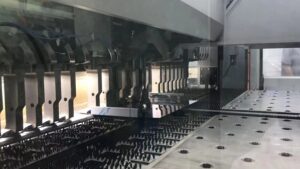
During the R&D and trial production stages, small-batch processing can effectively reduce the cost and risk of trial and error. Traditional large-scale production requires high investment in molds, equipment, and raw materials, which can easily lead to huge losses in the event of R&D failure. However, small-batch processing does not require a minimum order quantity, allowing for the avoidance of unnecessary capital occupation. For example, patch OEM processing supports small-batch trial production starting from 3,000 pieces, requiring only tens of thousands of yuan to complete market testing. In the field of mechanical processing, costs can be controlled by substituting materials or simplifying processes. At the same time, small-batch processing enables rapid prototype verification and iteration: SMT patch sampling can identify PCB design defects and optimize soldering parameters, while the flexible production line for sheet metal processing can quickly complete sample trial production, helping enterprises collect market feedback, adjust product formulas, structures, or processes, and significantly shorten the R&D cycle.
For customized needs, small-batch processing offers high flexibility to precisely match individual demands. It supports mixed-line production of multiple varieties, and through modular process flows and rapid mold changes using automated equipment, it can meet different customers’ product specifications, material requirements, and process needs. For example, sheet metal processing can flexibly combine cutting and bending modules, while laser solder ball bonding equipment can customize spot size and bonding angle to accommodate the special bonding requirements of irregular workpieces. In addition, small-batch processing can quickly respond to customized orders, eliminating the need for lengthy production line adjustment cycles. It allows for real-time adjustments to production plans based on customer needs, effectively enhancing customer satisfaction and market competitiveness.
Overall, small-batch processing provides a low-cost trial-and-error path for R&D and trial production, and creates flexible production solutions for customized demands. It is an important choice for the current manufacturing industry to adapt to market changes.