
The core pain points of the High Mix Low Volume (HMLV) production model lie in the low equipment utilization rate caused by frequent line changes and uncontrollable delivery schedules. To achieve efficient scheduling, it is necessary to start with two aspects: “categorization and integration” and “seamless connection”:
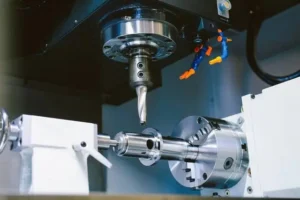
- Group technology, combining like items. Break the inertia of “producing in the order of orders” and shift to “producing according to process characteristics”.
- Material consolidation: Centralize the production scheduling of orders for the same material (such as aluminum alloy, ABS). This avoids time-consuming tasks like cleaning the machine and changing cutting fluid due to material switching, while also reducing material waste.
- Tool clustering: Utilize ERP or scheduling software to filter out orders that use the same tools or fixtures. For example, process all parts that require milling of inner R-corners consecutively, reducing the number of tool changes and increasing the effective equipment downtime (OEE).
- Offline preparation to achieve “zero waiting” Time is precious for small batch orders, and we must not let the machine wait for people.
- Parallel operation: Implement “off-machine pre-assembly”. While the machine tool is running the current order, simultaneously carry out programming, tool preset, fixture assembly, and blank pre-treatment for the next order.
- Standardized line change: Establish Standard Operating Procedures (SOPs) to specify the sequence of line change actions. The goal is to compress the changeover time to the minute level and achieve efficient collaboration with “one person for multiple machines”.
Third, adopt rolling scheduling and reserve flexibility. Orders with multiple varieties often come with urgent and unexpected insertions, making rigid scheduling highly susceptible to disruption.
- Capacity buffering: The production scheduling plan should not be fully booked. Reserve 10%-15% of the capacity as “flexible time” to specifically handle urgent orders or equipment failures.
- Mixing long and short orders: Adopt the strategy of “using large orders as a foundation and small orders for filling in gaps”. Leverage long-cycle orders to ensure basic capacity utilization, and utilize short-cycle small orders to flexibly fill equipment gaps and balance production rhythms.
- Prioritize bottleneck processes. Identify bottleneck processes within the workshop (such as CNC finishing or specific quality inspection steps), and prioritize ensuring that the bottleneck processes are “kept busy and machines are kept running” when scheduling. Other processes should follow the pace of the bottleneck to prevent accumulation of work-in-process.
In summary, the essence of small batch scheduling is to trade space for time, reduce switching times by combining similar processes, and compress auxiliary time through offline preparation, thereby establishing order amidst chaos.
Metalstar looks forward to collaborating with you!