With the fragmentation of market demand and the rise of personalized customization, small-batch processing is transitioning from a traditional “transitional link” to a core growth point in the manufacturing industry. In the future, this industry will exhibit the following four significant trends:
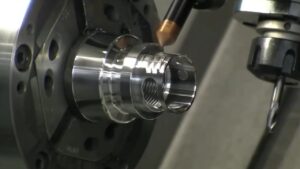
Firstly, the “hybrid manufacturing” model will become the mainstream process. Traditional small-batch processing relies heavily on CNC machining, which offers high precision but is costly and time-consuming. In the future, enterprises will no longer rely solely on a single process, but will instead move towards a deep integration of CNC and additive manufacturing (3D printing). By utilizing industrial-grade 3D printing technologies such as SLM and MJF to directly shape complex structural components, combined with precision post-processing using CNC, it is possible to break through geometric shape constraints, while ensuring surface precision and mechanical properties, achieving the optimal solution for cost and efficiency.
The second is the leap in flexible and automated production capabilities. Different from the rigid production lines for large-scale mass production, small-batch processing faces the pain points of “multiple varieties, small batches, and frequent line changes”. The application of Flexible Manufacturing Systems (FMS) and collaborative robots will become widespread, coupled with Advanced Production Scheduling (APS) systems. Factories will be able to achieve “single-piece flow” or “small-batch flow” production, quickly switch between processing tasks, and efficiently handle discrete orders without the need for downtime and resetting, thus resolving the contradiction between efficiency and customization.
Thirdly, digital platforms are reshaping the supply chain ecosystem. Similar to “Didi for manufacturing”, online manufacturing service platforms will reshape the industry landscape. Through cloud-based quotation systems, digital drawing analysis, and supply chain collaboration, customers can achieve “one-click ordering and full visibility”. This model breaks the information black box of traditional processing, accurately matches scattered idle capacity with massive demand, and drives the industry’s transformation from “workshop-style processing” to “platform-based services”.
Fourthly, application scenarios are moving deeper into high-end precision fields. With the explosion of emerging industries such as new energy vehicles, humanoid robots, and medical implants, small-batch processing is no longer limited to appearance prototypes, but more towards the direct production of functional components. This places higher demands on material performance, tolerance control, and surface treatment processes, forcing enterprises to enhance their process accumulation in difficult-to-process materials such as titanium alloys and special engineering plastics.
In summary, the small batch processing industry is moving towards a new stage characterized by flexibility, digitalization, and service-oriented transformation, becoming a key infrastructure supporting agile innovation in modern manufacturing.
Metalstar looks forward to collaborating with you!